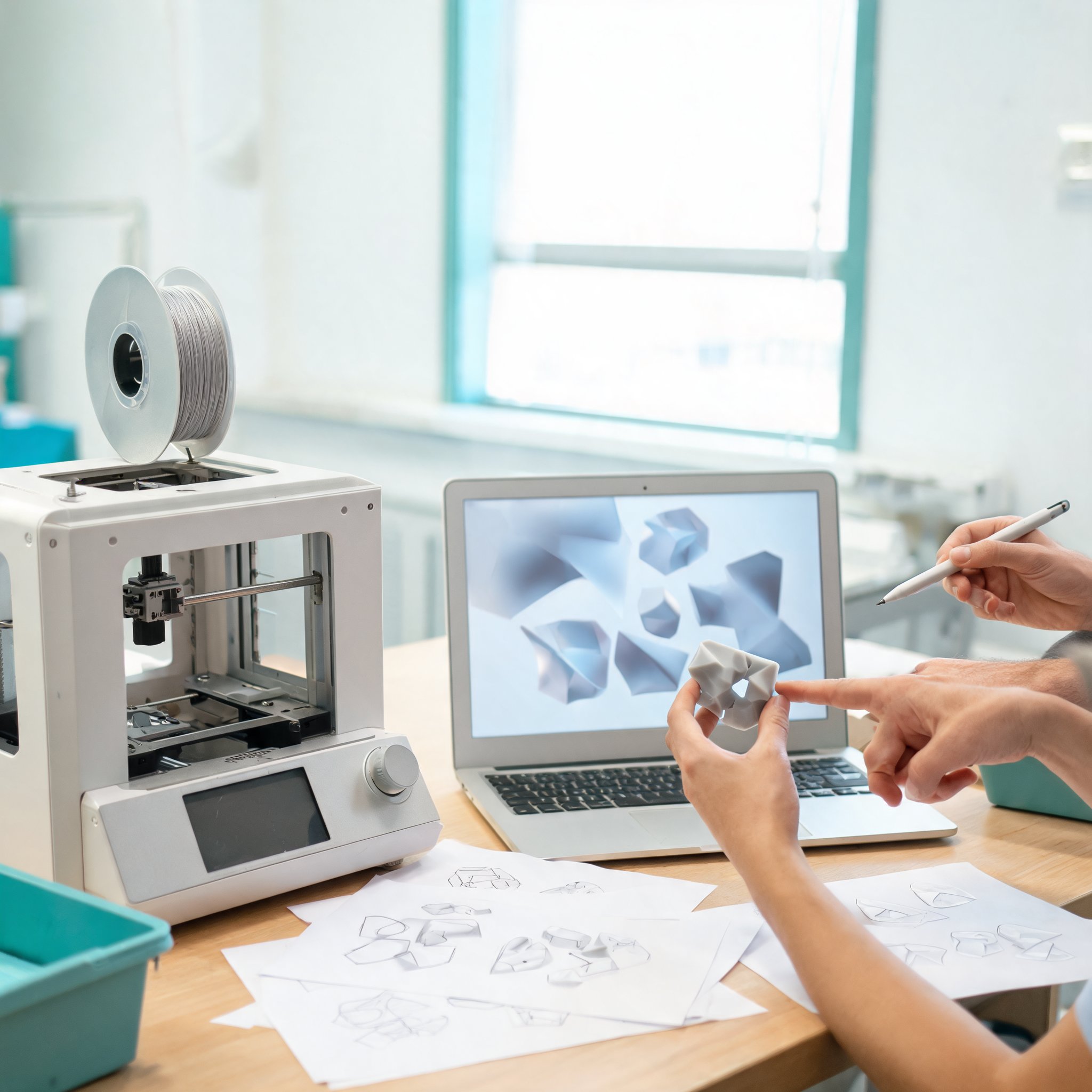
The University of Nottingham is leading a three-year project to bring 3D design and printing into hospital education in England, after receiving funding from a Royal Society Science Community Grant and the Julia Rausing Trust. The work is intended to widen access to STEM learning for children and young people who attend specialist schools because of complex health needs or long stays in hospital.
The project is being carried out with the National Association for Hospital Education, or NAHE, and with support from engineers and scientists at universities around the country. Their role is to help equip school staff with the 3D design and printing skills needed to run practical projects with students.
Printers, training and a term-long programme
An initial 25 schools will receive a 3D printer and take part in a national training programme led by the University of Nottingham, with assistance from local partner universities. The programme will run across a term through coordinated sessions built around user-centred design, ending with a showcase event. Students will be invited to look at their surroundings for inspiration and identify product designs that could work better for them.
Practical science and confidence
Sir Paul Nurse, president of the Royal Society, said schools are where most people first meet science. Practical work helps students experience the scientific process, weigh evidence, understand uncertainty and see how science helps people understand and improve the world, he said. He added that the aim is for all students to experience science and be inspired by it. More practical science in schools, he said, can help build future generations of scientists and innovators and equip people with the scientific literacy needed to be successful citizens.
Filling a gap for children in hospital education
Professor Ruth Goodridge, who is leading the project at Nottingham, said children and young people who spend long periods in hospital or attend specialist schools for complex health needs often miss the hands-on STEM experiences their peers take for granted. She said the project is meant to address that gap by offering 3D design and printing activities that can broaden horizons, build confidence and develop useful skills.
Goodridge also said hospital school staff report that illness can make a child’s world feel small. Disrupted education, anxiety and low confidence can affect engagement with learning, she said. In that context, 3D printing gives students a practical and motivating route to develop new skills, solve problems and make something tangible, providing a sense of achievement when other parts of their lives may feel beyond their control. For many young people, she said, the project is a chance not only to learn new skills but also to see new possibilities for the future.
Rehabilitation and shared achievement
The NIHR HealthTech Research Centre for Rehabilitation, led by Nottingham University Hospitals NHS Trust, is partnering with the project to examine whether 3D printing technologies could support children’s rehabilitation and recovery after serious illness or injury.
Stephen Deadman of NAHE said the project will provide vital skills for children who cannot access traditional school, giving them valuable hands-on experience with specialist equipment. He said that in addition to the individual skills students will build, working together within and between schools will bring a sense of community and shared achievement.