A sponsored commentary by Terence Parker, a Michigan resident and Solar Mounts LLC team member, argues that the U.S. Department of Energy’s October 12, 2026, emergency order for PJM Interconnection should prompt Michigan and the wider PJM region to add generating capacity before emergency measures become routine.
The order, effective October 13–16, authorizes specified power plants to operate as needed for reliability and allows backup generators at large facilities to help reduce grid demand during emergencies, according to the commentary. Solar Mounts, a designer and manufacturer of commercial and utility-scale solar mounting systems, says the order does not make blackouts inevitable but highlights strains on the electricity system.
Capacity prices and emergency measures
The commentary points to PJM capacity auction results as evidence of the difficulty in securing enough electricity for future demand. It says prices reached $329.17 per megawatt-day for the 2026–2027 delivery year and $333.44 for 2027–2028, with the latter auction falling short of PJM’s stated reliability requirement. Capacity costs are only one part of electricity bills, the piece notes, but rising prices signal growing pressure on consumers.
Solar Mounts also flags the operational and environmental consequences of relying more heavily on emergency resources. The October order permits designated generating units to exceed specified operating limits when needed for reliability and authorizes PJM to direct backup generation at data centers and other large facilities, potentially including diesel generators as a last resort, according to the commentary. Running fossil-fuel plants more often can increase emissions depending on the units involved, while diesel generators can add local noise pollution and expose operators to high diesel prices, it says.
Weather uncertainty and faster buildout
The commentary cites NOAA’s October 15, 2026, winter outlook, which anticipates warmer-than-average conditions across much of the northern United States, including the Midwest, influenced by a strong El Niño. Even so, it says seasonal forecasts cannot predict every period of extreme demand and that aging infrastructure, maintenance, changing weather and growing electricity consumption reinforce the need for advance planning.
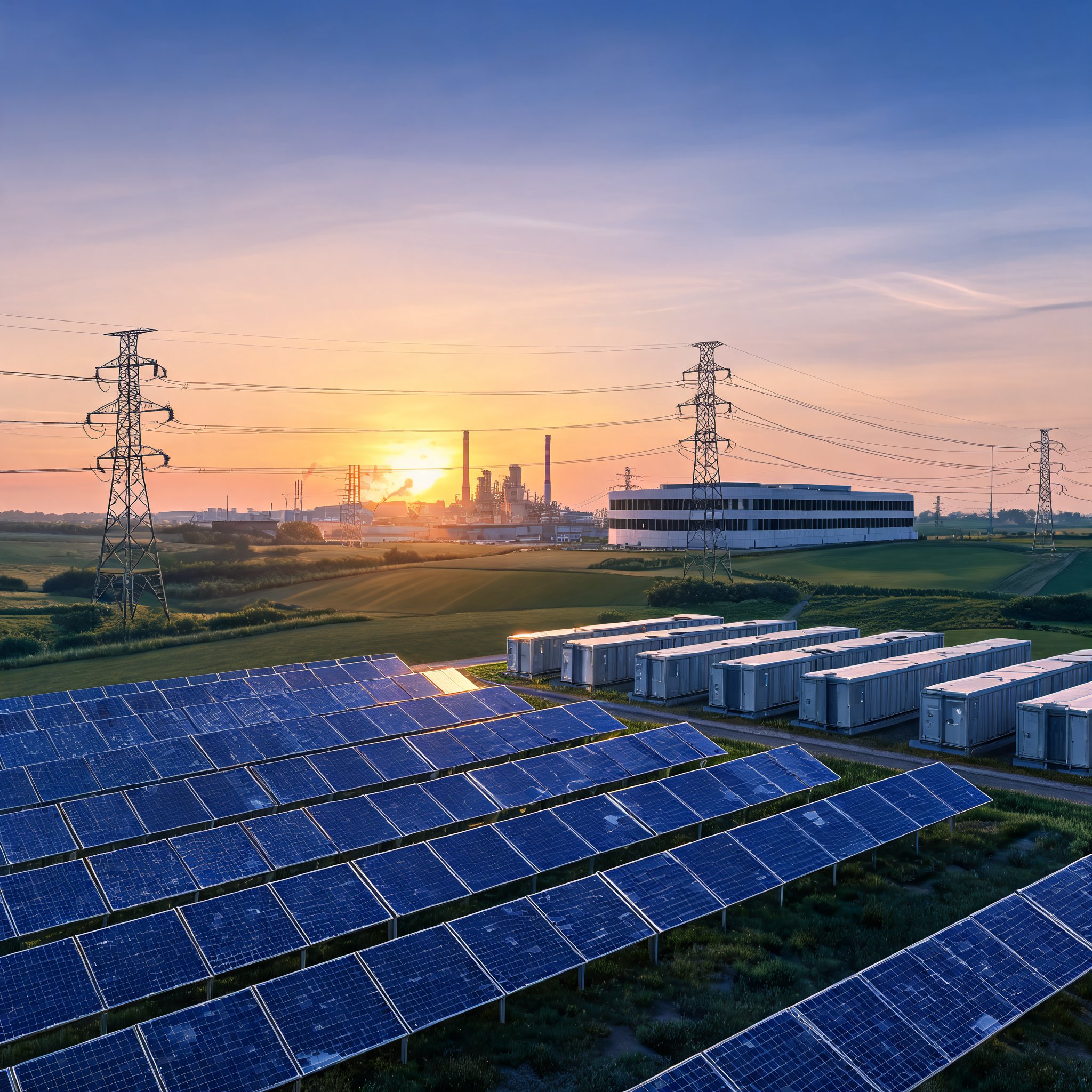
Solar Mounts argues that utility-scale solar, wind and battery storage can help close the gap on timelines that many conventional projects cannot match. Suitable solar projects may be built within 18 months depending on permitting, equipment and interconnection, while new nuclear facilities generally require substantially longer development periods, the commentary says. It adds that faster interconnection reviews and better coordination among PJM, utilities, regulators, developers and state governments, along with transmission upgrades, would bring capacity online sooner.
Land use, data centers and demand
The piece also addresses concerns about solar development on productive farmland in rural Calhoun County, where Solar Mounts is based. It says well-designed projects can include restoration plans that allow agricultural use to resume when leases end, and that solar leases can provide farmers with supplemental income. Agrivoltaic systems combine generation with compatible crops or livestock, while parking lots, commercial properties, brownfields, landfills and other underused sites can also host solar, according to the commentary. Solar carports and community solar are cited as additional options.
On data centers, Solar Mounts says growing demand, particularly in Virginia and other parts of PJM’s territory, is adding pressure to a constrained grid. It argues that developers of new hyperscale facilities should show how they will secure adequate electricity and pay their fair share of supporting infrastructure, using dedicated generation, renewable energy contracts, batteries, flexible demand and grid upgrades. The commentary cautions that requiring every facility to build a gas-fired peaker plant is not necessarily the best answer, citing equipment and supply-chain constraints and the emissions and operating costs of additional fossil-fuel generation.
Solar Mounts concludes that repeated emergency orders, rising capacity costs and greater reliance on high-emission generation are not sound long-term strategies. It calls for faster approvals, better grid planning and a serious commitment to adding generation and storage before shortages worsen.